Category: Uncategorized

  • Galatians 6

    June 25, 2025

    Galatians 6 ESV

    Brothers, if anyone is caught in any transgression, you who are spiritual should restore him in a spirit of gentleness. Keep watch on yourself, lest you too be tempted. Bear one another’s burdens, and so fulfill the law of Christ. For if anyone thinks he is something, when he is nothing, he deceives himself. But let each one test his own work, and then his reason to boast will be in himself alone and not in his neighbor. For each will have to bear his own load. Let the one who is taught the word share all good things with the one who teaches. Do not be deceived: God is not mocked, for whatever one sows, that will he also reap. For the one who sows to his own flesh will from the flesh reap corruption, but the one who sows to the Spirit will from the Spirit reap eternal life. And let us not grow weary of doing good, for in due season we will reap, if we do not give up.  So then, as we have opportunity, let us do good to everyone, and especially to those who are of the household of faith.  See with what large letters I am writing to you with my own hand.  It is those who want to make a good showing in the flesh who would force you to be circumcised, and only in order that they may not be persecuted for the cross of Christ.  For even those who are circumcised do not themselves keep the law, but they desire to have you circumcised that they may boast in your flesh.  But far be it from me to boast except in the cross of our Lord Jesus Christ, by which the world has been crucified to me, and I to the world.  For neither circumcision counts for anything, nor uncircumcision, but a new creation.  And as for all who walk by this rule, peace and mercy be upon them, and upon the Israel of God.  From now on let no one cause me trouble, for I bear on my body the marks of Jesus.  The grace of our Lord Jesus Christ be with your spirit, brothers. Amen.

    Discussion Questions:

    Paul continues to paint the picture of what living under the Spirit looks like. 

    In verses 1-10 he gives a series of spiritual exhortations.  How do these exhortations relate to the specific situation in the Galatian churches?

    In verses 11-18 how does Paul use Jesus’s manner of death as a symbol for Christians to follow?

    Discussion Summary:

    Verses 1-10: 

    Verse 2 speaks of the responsibility that the Galatians had to help each other in their spiritual life.  Paul is bearing their burdens and trying to relieve their burdens by correcting their misunderstandings in this letter.

    Verse 4 speaks of Paul’s distrust of the motives of these teachers who are trying to put the Galatians back under the law.  They are doing it to make themselves look like great teachers.  Philippians 2:3,4 is another exhortation to not act from selfish ambition.

    Verse 7 is a warning to these false teachers.  Their hypocrisy is seen by God and will be brought to light.

    Verses 11-18:

    In essence, do not water down the Jesus’ death by making it equal to the law in salvation.   Paul’s life is an example of how to properly glory in the cross.  Verse 17 from the Good News Translation reads:  “To conclude: let no one give me anymore trouble, because the scars I have on my body show that I am a slave of Jesus.”


  • Luke 13:22-30

    June 22, 2025

    Luke 13:22–30 ESV

    He went on his way through towns and villages, teaching and journeying toward Jerusalem.  And someone said to him, “Lord, will those who are saved be few?” And he said to them,  “Strive to enter through the narrow door. For many, I tell you, will seek to enter and will not be able.  When once the master of the house has risen and shut the door, and you begin to stand outside and to knock at the door, saying, ‘Lord, open to us,’ then he will answer you, ‘I do not know where you come from.’  Then you will begin to say, ‘We ate and drank in your presence, and you taught in our streets.’  But he will say, ‘I tell you, I do not know where you come from. Depart from me, all you workers of evil!’  In that place there will be weeping and gnashing of teeth, when you see Abraham and Isaac and Jacob and all the prophets in the kingdom of God but you yourselves cast out.  And people will come from east and west, and from north and south, and recline at table in the kingdom of God.  And behold, some are last who will be first, and some are first who will be last.”

    Discussion Questions:

    1)  Who was Jesus referring to when he first spoke these words during his first advent?

    2)  Do these have application during the Gospel Age or Gospel Age harvest?

    Discussion Summary:

     Reading verse 27 literally, we see that Jesus is referring to the people throughout Galilee and Judea that he preached to.  This would include the religious leaders of his day (Scribes, Pharisees, Doctors of the Law) and the common people.  There is a parallel passage in Matthew 8:5-13 where Jesus says of the Roman Centurion, “No one in Israel have I found such faith.”

      The door of access and opportunity is controlled by Jesus (Revelation 3:7).  The nation of Israel lost their opportunity to obtain the promise of inheritance as described in Romans 11:7.

      We too can assume that we are Christians and therefore will automatically inherit the promises of God.  But this assumption can lead to a condition of pride and a lack of conscientiousness.  We must ask ourselves:  Do my words and actions line up with God’s word and with each other?  Are we living as Jesus asks us to live?  The lesson of these verses is that we can’t go on pretending forever!


    1. Galatians 5

      June 18, 2025

      Galatians 5 ESV

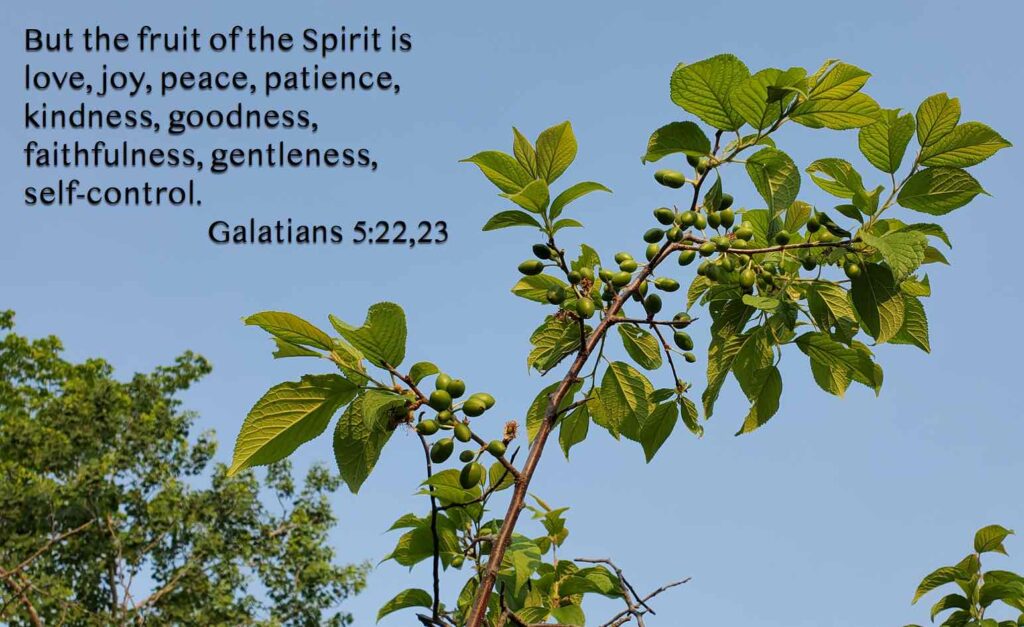
      For freedom Christ has set us free; stand firm therefore, and do not submit again to a yoke of slavery. Look: I, Paul, say to you that if you accept circumcision, Christ will be of no advantage to you. I testify again to every man who accepts circumcision that he is obligated to keep the whole law. You are severed from Christ, you who would be justified by the law; you have fallen away from grace. For through the Spirit, by faith, we ourselves eagerly wait for the hope of righteousness. For in Christ Jesus neither circumcision nor uncircumcision counts for anything, but only faith working through love. You were running well. Who hindered you from obeying the truth? This persuasion is not from him who calls you. A little leaven leavens the whole lump.  I have confidence in the Lord that you will take no other view, and the one who is troubling you will bear the penalty, whoever he is.  But if I, brothers, still preach circumcision, why am I still being persecuted? In that case the offense of the cross has been removed.  I wish those who unsettle you would emasculate themselves!  For you were called to freedom, brothers. Only do not use your freedom as an opportunity for the flesh, but through love serve one another.  For the whole law is fulfilled in one word: “You shall love your neighbor as yourself.”  But if you bite and devour one another, watch out that you are not consumed by one another.  But I say, walk by the Spirit, and you will not gratify the desires of the flesh.  For the desires of the flesh are against the Spirit, and the desires of the Spirit are against the flesh, for these are opposed to each other, to keep you from doing the things you want to do.  But if you are led by the Spirit, you are not under the law.  Now the works of the flesh are evident: sexual immorality, impurity, sensuality, idolatry, sorcery, enmity, strife, jealousy, fits of anger, rivalries, dissensions, divisions, envy, drunkenness, orgies, and things like these. I warn you, as I warned you before, that those who do such things will not inherit the kingdom of God. But the fruit of the Spirit is love, joy, peace, patience, kindness, goodness, faithfulness, gentleness, self-control; against such things there is no law. And those who belong to Christ Jesus have crucified the flesh with its passions and desires. If we live by the Spirit, let us also keep in step with the Spirit. Let us not become conceited, provoking one another, envying one another.

      Discussion Questions:

      Dear brethren, I know that there are many different ways to divide chapters 5 and 6 and there are many things to talk about in these chapters.  But our objective during this study is to get an overview of what chapter 5 is about.

      I see in this chapter that Paul is contrasting three ways of living: 

      1)  living under the Law (which the Gentile Galatians are starting to adopt) 

      2)  living under the flesh (which the false teachers are saying will result if the Galatians don’t put themselves under the Law

      3)  living under the Spirit (which Paul is urging the Galatians to continue doing)

      So, for our discussion questions, we would like to explore these three ways of living:

      Verses 1-12:  What is the inevitable result of living under the Law?

      Verses 13-21: What is the inevitable result of living under the flesh?

      Verses 22–26:  What is the inevitable result of living under the Spirit?

      Discussion Summary:

      Verses 1-12:  Christians living under the Law are unable to keep it fully and would be condemned by sin.  Jesus’ forgiveness of sin would not be the central feature of their lives.  Instead, keeping from sin by obedience to the law would be the central feature of their lives.

      Paul also reminds the Galatians that he did “preach” circumcision when he had Timothy circumcised (Acts 16:3), but it was not to replace the cross.  Rather it was done as an aid to gospel preaching to Jewish people.

      Verses 13-21:  Christians who are still living after the flesh are not confined by outward laws or rules that are agreed upon.   The result is that each person’s idea becomes a law unto themselves giving everyone a reason to argue.  Love is easily forgotten.

      Verses 22-26:  Christians who live under the Spirit are liberated from both the Law and the flesh.  The spirit will compel them to develop characteristics that are Christ-like.  These Christians will imitate Christ’s sacrifice of himself and will give up their preferences in the interests of others.  They will become a positive influence in the lives of other Christians.


    2. Luke 13:18-21

      June 15, 2025

      Luke 13:18–21 ESV

      He said therefore, “What is the kingdom of God like? And to what shall I compare it? It is like a grain of mustard seed that a man took and sowed in his garden, and it grew and became a tree, and the birds of the air made nests in its branches.” And again he said, “To what shall I compare the kingdom of God?  It is like leaven that a woman took and hid in three measures of flour, until it was all leavened.”

      Discussion Questions:

      How does Jesus in verses 18 and 19, using the grain of mustard seed, describe the kingdom of God?

      In verses 20 and 21, what does the illustration of the leaven and the measures of flour reveal about the kingdom of God?

      Discussion Summary:

      Verses 18,19:  The kingdom of God as begun in Jesus’ ministry would grow over the centuries until eventually it fills the earth (Isaiah 61:11; Habakkuk 2:14)  Many of the symbols of this parable can be found in Ezekiel 17:22-24.

      There is also a negative perspective of this parable.  The kingdom of God as begun in Jesus’ ministry was corrupted over time and became powerful and aligned to the kings of this world as Christendom.   This can be found in Matthew 13:24-30.

      Verses 19,20: The Kingdom of God starts small and grows through a hidden, transformative process.  This can be seen in a positive way through the lives of Christians (Colossians 3:3).  This can also be seen in a negative way when leaven is viewed as sin (1 Corinthians 5:6,7; Luke 12:1).  Revelation contrasts the pure virgin church of Revelation 12:1 to the great harlot of Revelation 17:1-6.


    3. Galatians 4

      June 11, 2025

      Galatians 4 ESV

      I mean that the heir, as long as he is a child, is no different from a slave, though he is the owner of everything, but he is under guardians and managers until the date set by his father. In the same way we also, when we were children, were enslaved to the elementary principles of the world. But when the fullness of time had come, God sent forth his Son, born of woman, born under the law, to redeem those who were under the law, so that we might receive adoption as sons.  And because you are sons, God has sent the Spirit of his Son into our hearts, crying, “Abba! Father!”  So you are no longer a slave, but a son, and if a son, then an heir through God.  Formerly, when you did not know God, you were enslaved to those that by nature are not gods.  But now that you have come to know God, or rather to be known by God, how can you turn back again to the weak and worthless elementary principles of the world, whose slaves you want to be once more?  You observe days and months and seasons and years!  I am afraid I may have labored over you in vain.  Brothers, I entreat you, become as I am, for I also have become as you are. You did me no wrong.  You know it was because of a bodily ailment that I preached the gospel to you at first,  and though my condition was a trial to you, you did not scorn or despise me, but received me as an angel of God, as Christ Jesus.  What then has become of your blessedness? For I testify to you that, if possible, you would have gouged out your eyes and given them to me.  Have I then become your enemy by telling you the truth?  They make much of you, but for no good purpose. They want to shut you out, that you may make much of them.  It is always good to be made much of for a good purpose, and not only when I am present with you,  my little children, for whom I am again in the anguish of childbirth until Christ is formed in you!  I wish I could be present with you now and change my tone, for I am perplexed about you.  Tell me, you who desire to be under the law, do you not listen to the law?  For it is written that Abraham had two sons, one by a slave woman and one by a free woman.  But the son of the slave was born according to the flesh, while the son of the free woman was born through promise.  Now this may be interpreted allegorically: these women are two covenants. One is from Mount Sinai, bearing children for slavery; she is Hagar.  Now Hagar is Mount Sinai in Arabia; she corresponds to the present Jerusalem, for she is in slavery with her children.  But the Jerusalem above is free, and she is our mother.  For it is written, “Rejoice, O barren one who does not bear; break forth and cry aloud, you who are not in labor! For the children of the desolate one will be more than those of the one who has a husband.”  Now you, brothers, like Isaac, are children of promise.  But just as at that time he who was born according to the flesh persecuted him who was born according to the Spirit, so also it is now.  But what does the Scripture say? “Cast out the slave woman and her son, for the son of the slave woman shall not inherit with the son of the free woman.”  So, brothers, we are not children of the slave but of the free woman.

      Discussion Question

      In chapter 4 Paul has three thought sections:

      • Verses 1-7 where he describes how both Jews and Gentiles come out of slavery to the freedom of sonship.
      • Verses 8-20 where he discusses their past and present relationship with him
      • Verses 21-31 where he gives an allegory from the Old Testament

      What points does Paul make in each section?

      Discussion Summary:

      Verses 1-7:  These gentile Christians were once heathens.  Their lives were governed by “the elements of the cosmos.”  For example, stars, horoscopes, temple calendars of sacrifice dictated their worship.  Paul asks if now that they have been made free from those powers do they want to put themselves back under outside influences that dictate their worship?  The Mosaic law prescribes when and where one sacrifices and prays.  Christians are supposed to worship freely in Spirit and Truth (John 4:19-24).

      Verses 8-20:  Paul uses the example of Abraham and his wives to make an allegory.  The first wife to have children was a slave and so her child did not have full rights of inheritance.  The second wife to have a child was free and so her child had full rights of inheritance.  Paul equates Christians to the second child of Abraham.

      Verses 21-31:  Paul quotes the prophesy in Isaiah 54:1 to show that the second child was more blessed of God.  He explains that Christians are more blessed because of the freedom that they have in Christ.


    4. Bible Student Convention (Vancouver, BC)

      June 8, 2025

      Today we cancelled our study so that we could join an online Bible Student Convention.


    5. Praise, Prayer & Testimony

      June 4, 2025

      Today we had a meeting of praise to our Heavenly Father. We shared our testimonies of how the Lord has been evident in our lives.


    6. Memorial Service

      June 1, 2025

      Today’s study was cancelled as a Memorial Service was held. We remember those who mourn in prayer.


    7. Galatians 3

      May 28, 2025

      Galatians 3 ESV

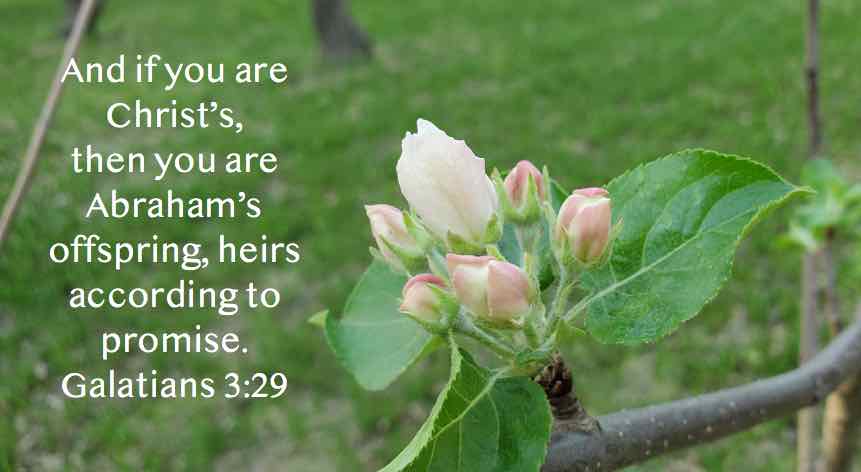
      O foolish Galatians! Who has bewitched you? It was before your eyes that Jesus Christ was publicly portrayed as crucified.  Let me ask you only this: Did you receive the Spirit by works of the law or by hearing with faith?  Are you so foolish? Having begun by the Spirit, are you now being perfected by the flesh?  Did you suffer so many things in vain—if indeed it was in vain?  Does he who supplies the Spirit to you and works miracles among you do so by works of the law, or by hearing with faith—  just as Abraham “believed God, and it was counted to him as righteousness”?  Know then that it is those of faith who are the sons of Abraham.  And the Scripture, foreseeing that God would justify the Gentiles by faith, preached the gospel beforehand to Abraham, saying, “In you shall all the nations be blessed.”  So then, those who are of faith are blessed along with Abraham, the man of faith.  For all who rely on works of the law are under a curse; for it is written, “Cursed be everyone who does not abide by all things written in the Book of the Law, and do them.”  Now it is evident that no one is justified before God by the law, for “The righteous shall live by faith.”  But the law is not of faith, rather “The one who does them shall live by them.”  Christ redeemed us from the curse of the law by becoming a curse for us—for it is written, “Cursed is everyone who is hanged on a tree”—  so that in Christ Jesus the blessing of Abraham might come to the Gentiles, so that we might receive the promised Spirit through faith.  To give a human example, brothers: even with a man-made covenant, no one annuls it or adds to it once it has been ratified.  Now the promises were made to Abraham and to his offspring. It does not say, “And to offsprings,” referring to many, but referring to one, “And to your offspring,” who is Christ.  This is what I mean: the law, which came 430 years afterward, does not annul a covenant previously ratified by God, so as to make the promise void.  For if the inheritance comes by the law, it no longer comes by promise; but God gave it to Abraham by a promise.  Why then the law? It was added because of transgressions, until the offspring should come to whom the promise had been made, and it was put in place through angels by an intermediary.  Now an intermediary implies more than one, but God is one.  Is the law then contrary to the promises of God? Certainly not! For if a law had been given that could give life, then righteousness would indeed be by the law.  But the Scripture imprisoned everything under sin, so that the promise by faith in Jesus Christ might be given to those who believe.  Now before faith came, we were held captive under the law, imprisoned until the coming faith would be revealed.  So then, the law was our guardian until Christ came, in order that we might be justified by faith.  But now that faith has come, we are no longer under a guardian,  for in Christ Jesus you are all sons of God, through faith.  For as many of you as were baptized into Christ have put on Christ.  There is neither Jew nor Greek, there is neither slave nor free, there is no male and female, for you are all one in Christ Jesus.  And if you are Christ’s, then you are Abraham’s offspring, heirs according to promise.

      Discussion Question:

      Our challenge this week is to understand Apostle Paul’s doctrinal argument in Galatians chapter 3. 

      Our question for discussion is:  What are the points the Apostle Paul is making in his argument? 

      The chapter can be broken down into the following sections or the Apostle Paul’s paragraphs. 

      Sections:

      1-5:  Intro to Galatian brethren

      6-9:  Abrahamic Promise

      10-14:  Curse of the Law

      15-18:  Abrahamic Covenant and Law Covenant

      19-25:  Purpose of the Law

      26-29:  New way for Christians – putting on Christ

      Discussion Summary:

      The gentile Christians in Galatia had been converted by Paul.  He did not teach that they had to observe the law when they converted.  He is asking them if it is only now, as they are being pressured to observe the law that they are truly Christian?

      Christians believe that the promise made to Abraham that through him all the nations would be blessed is fulfilled in Jesus.  He inherited that promise.

      The law given at Mt. Sinai came after the promise to Abraham.  The law showed that no one until Jesus was able to keep the law perfectly.  No one was able to inherit.  Paul quotes Habakkuk 2:4 and Leviticus 18:5 to prove this point.  The law was also designed to put the people into an attitude that they would need to have their failure to keep the law, their sins, forgiven.

      Once Jesus proved worthy to inherit the Abrahamic promise by obeying the law of God perfectly, he then gave up that perfect life for all humans.  Those who now have faith in Jesus Christ and in his ability to forgive sins have the opportunity to become Christians and inherit the promise.

    8. Luke 13:10-17

      May 25, 2025

      Luke 13:10–17 ESV

      Now he was teaching in one of the synagogues on the Sabbath.  And behold, there was a woman who had had a disabling spirit for eighteen years. She was bent over and could not fully straighten herself.  When Jesus saw her, he called her over and said to her, “Woman, you are freed from your disability.”  And he laid his hands on her, and immediately she was made straight, and she glorified God.  But the ruler of the synagogue, indignant because Jesus had healed on the Sabbath, said to the people, “There are six days in which work ought to be done. Come on those days and be healed, and not on the Sabbath day.”  Then the Lord answered him, “You hypocrites! Does not each of you on the Sabbath untie his ox or his donkey from the manger and lead it away to water it?  And ought not this woman, a daughter of Abraham whom Satan bound for eighteen years, be loosed from this bond on the Sabbath day?”  As he said these things, all his adversaries were put to shame, and all the people rejoiced at all the glorious things that were done by him.

      Discussion Question:

      What lessons regarding the Law and Satan’s power was Jesus trying to convey to the people?

      Discussion Summary:

      This woman did not approach Jesus.  He was the one who noticed her and called her over.  He did not ignore those on the sidelines but engaged those who needed his help.  She had come to the synagogue demonstrating her faith in God even in her affliction.  Jesus responded to her faith.

      Jesus had earlier in chapter 6, verse 5 declared himself to be Lord of the Sabbath.  It would be through his death that he would be able to offer to all a true rest from the labour of sin.  We read in Leviticus 25 that as the sabbath is every 7 days, and every 7 years there is a sabbath year where the land lies fallow, so on the 50th year (following 7×7) there was a year of jubilee in which all captives were released, debts pardoned and land redistributed to the tribes.  Jesus is illustrating this grand sabbath lesson as foretold in Isaiah 61:1.

      Satan as the “god of this world” has blinded the eyes of men that they cannot see (2 Corinthians 4:4).  Figuratively, people are in bondage to him and cannot free themselves.  They are in effect leashed like an animal.  While the religious leaders would have unleashed an animal on the sabbath to lead it to water, they denied the unleashing of this woman by healing her.